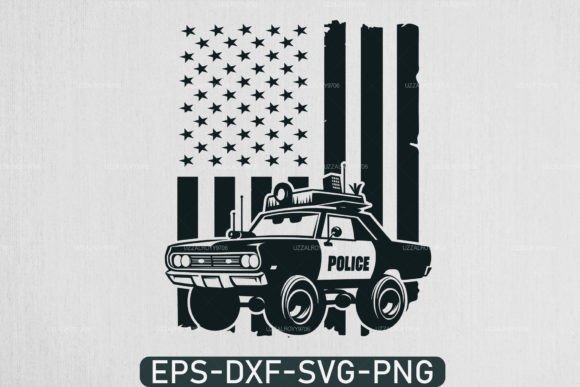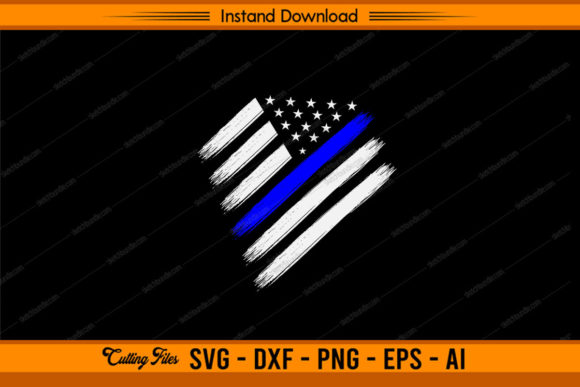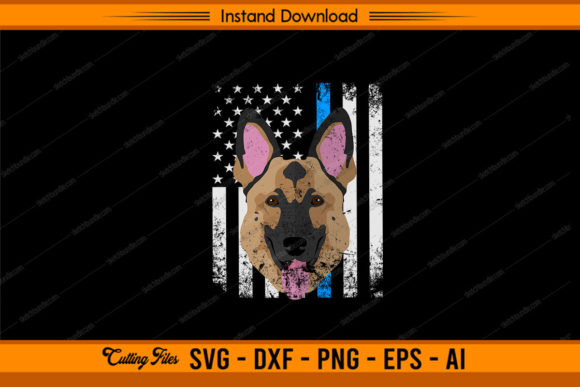
Police with Dog US Flag Graphics for Crafts
As someone who’s launched over 200 digital product listings across Etsy, Creative Market, and Shopify—mostly SVG bundles, printable collections, and Canva template kits—I opened Police with Dog US Flag expecting a straightforward patriotic motif. What I got was something more nuanced: a bold, mid-weight illustration that balances authority and loyalty without veering into militaristic rigidity or cartoonish softness. It reads as respectful, grounded, and instantly recognizable—ideal for sellers targeting first responders, veterans, law enforcement families, and patriotic small businesses.
The design features a standing officer in full uniform beside a poised K-9, both facing forward beneath a crisply rendered US flag. The composition is centered, with clean negative space around the figures—critical for cutting accuracy and scalable mockups. It doesn’t feel festive like July 4th clipart, nor does it lean into solemn memorial tone. Instead, it occupies a confident middle ground: commercial-ready, emotionally resonant, and versatile enough to anchor multiple product types without needing heavy editing.
In my test shop scenario—a summer-themed “Patriotic Professions” digital bundle for Etsy—I used Police with Dog US Flag across six distinct assets: a sublimation-ready PNG for tumblers, an SVG cut file for vinyl decals on police appreciation mugs, a transparent PNG sticker sheet for planner inserts, a Canva template for printable greeting cards, a layered PSD-style PNG for social media banners, and a simplified monochrome version for embroidery digitizing prep. Each use case revealed its strengths: crisp vector paths for Cricut Explore Air 2 cuts, consistent stroke weight at 300 DPI, and no stray pixels or anti-aliasing blur in the PNGs.
This graphic design asset shines where visual clarity and thematic resonance matter most. It works exceptionally well in large-format product mockups—think t-shirt previews on model shots or framed wall art renders—because the central alignment and balanced proportions hold up even when scaled to 24 inches wide. It also anchors themed bundles effectively: pairing it with “Firefighter With Helmet” and “EMS Star” graphics creates instant cohesion for a first-responder collection. As a printable design, it holds presence on 8.5×11 inch art prints and fits neatly into 5×7 invitation templates without cropping or distortion.
For digital product creators, Police with Dog US Flag supports strong brand consistency. When applied across planner stickers, blog graphics, and Instagram story highlights, it reinforces a trustworthy, community-oriented voice—especially valuable for handmade business owners building small business branding around service and duty. Its clean lines translate well to packaging design (e.g., thank-you cards for police charity fundraisers) and help elevate perceived value in digital download listings by signaling professional execution.
That said, there are real limits—and knowing them prevents wasted time and refunds. Avoid using it for tiny sticker details under 0.5 inches: the dog’s collar insignia and badge details begin to blur. Don’t drop it into text-heavy Canva templates without generous padding; the visual hierarchy suffers if competing with dense headlines. And while it looks sharp on white and light gray backgrounds, contrast dips noticeably on navy or charcoal—so always preview your final mockup against intended background colors before publishing.
I also recommend testing three practical checkpoints before listing anything commercially: First, open the SVG in Design Space and run a quick “flatten and attach” test to confirm clean cut lines—no overlapping paths or hidden layers. Second, drag the PNG into a dark-mode browser tab and check transparency integrity; one version I reviewed had a faint white halo near the flag’s edge (easily fixed with a quick levels adjustment, but worth catching early). Third, print a physical sample on matte cardstock at 100% scale—verify color fidelity, especially in the flag’s red and blue tones, which can shift depending on monitor calibration and printer profiles.
File organization matters just as much as design quality. When bundling Police with Dog US Flag with other assets, label files clearly: “police-dog-flag-svg”, “police-dog-flag-png-300dpi”, “police-dog-flag-transparent”. Customers appreciate predictability—especially Cricut users who rely on consistent naming to batch-import into projects. And yes, double-check the commercial license: this is a commercial design, but verify whether attribution is required, whether resale of unmodified files is permitted, and whether print-on-demand platforms like Printful or Redbubble are explicitly covered.
Typography pairing is another subtle lever. I tested Police with Dog US Flag alongside four font categories: a sturdy sans serif (like Montserrat Bold) for t-shirt designs, a classic serif (Cormorant Garamond) for invitation templates, a clean script (Dancing Script) for appreciation cards, and a bold display font (Bebas Neue) for social media banners. It held up strongest with the sans serif and serif pairings—its structured composition benefits from typographic contrast rather than competition.
Where this asset truly earns its place in your creative marketplace toolkit is in lowering production friction. You’re not starting from scratch—you’re iterating from a solid, licensable foundation. Whether you’re building a seasonal digital download shop, prepping a POD store launch, or expanding your Canva template library, Police with Dog US Flag delivers reliable visual weight, niche relevance, and cross-platform adaptability. It won’t replace custom illustration—but for sellers balancing speed, authenticity, and commercial viability, it’s a quietly effective piece of design infrastructure.
Bottom line: If your audience values respect, service, and American symbolism—and you need a scalable, cut-ready, printable design that performs across stickers, apparel, wall art, and social content—Police with Dog US Flag is worth adding to your working library. Just test it, verify it, and deploy it with intention.