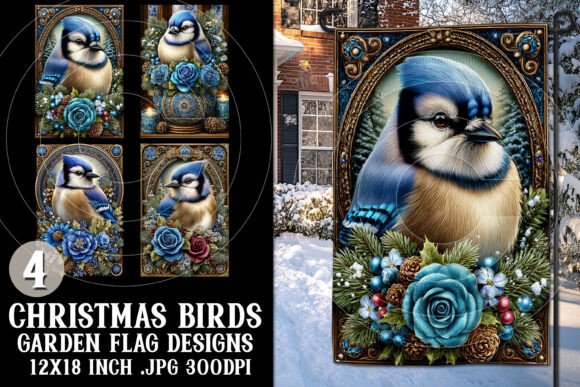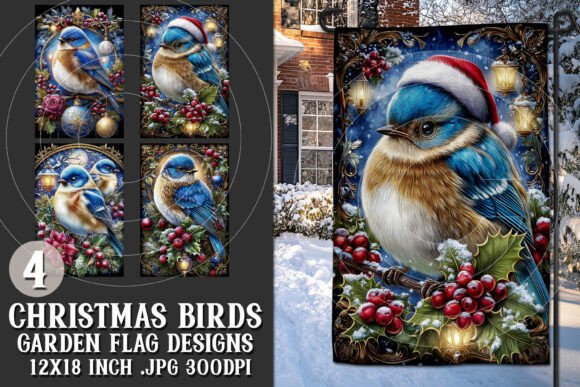
Christmas Birds 4 Garden Flag Designs 9
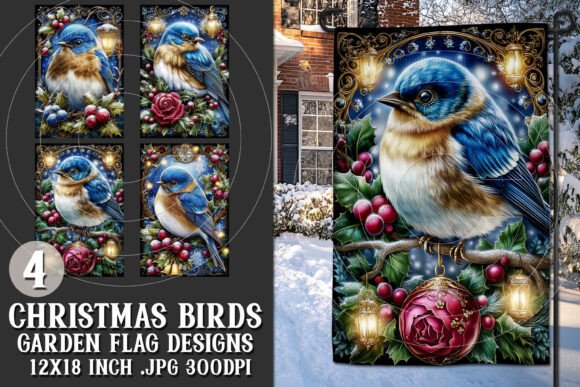
As a designer who’s stitched hundreds of holiday pieces—from boutique aprons to personalized baby blankets—I opened Christmas Birds 4 Garden Flag Designs 9 expecting festive charm. What I found wasn’t just another seasonal graphic; it was a quiet, confident composition that leans into warmth over whimsy. Four birds perched among minimalist evergreen sprigs and soft snow-dusted branches—no glitter bombs, no cartoonish faces, no forced cheer. It breathes like a handmade heirloom, not a mass-produced clipart file. That first impression matters: this isn’t a design shouting for attention. It invites pause.
A Real-World Test: Embroidering a Linen Kitchen Towel Set
Last week, I prepped a small batch of linen tea towels for a local craft fair—hand-stitched hems, natural dye accents, and one embroidered motif per towel. I chose Christmas Birds 4 Garden Flag Designs 9 as the centerpiece. Why? Because its balanced negative space gave me room to work with texture without overcrowding. Linen’s slub and slight irregularity can swallow fine details, but the birds’ clean outlines held up beautifully in satin stitch, and the gentle fill stitches in the foliage stayed legible—not muddy, not sparse. Customers didn’t just say “cute.” They paused, traced the branch with their fingers, and asked, “Is this hand-drawn?” That’s the kind of reaction that turns a $22 towel into a keepsake.
Where This Design Shines (and Where It Asks for Thought)
Christmas Birds 4 Garden Flag Designs 9 thrives on stable, medium-weight fabrics where stitch definition matters: cotton twill aprons, canvas tote bags, structured sweatshirt yokes, and pillow covers made from duck cloth or quilting cotton. Its rhythm—birds spaced with breathing room, subtle asymmetry in branch angles—translates well to custom apparel and embroidered patches meant for jackets or backpacks. As a machine embroidery design, it reads clearly even at 4–5 inches wide, making it versatile for both boutique branding and Etsy listings targeting customers who value understated holiday style.
That said, it’s not a “drop-in-and-go” file for every surface. On thin or stretchy fabric—like lightweight jersey tees or baby onesies—I’d recommend adding light cutaway stabilizer *under* and tear-away *on top*, especially beneath the bird bodies where satin stitch density peaks. Curved surfaces like caps require careful hooping and possibly splitting the design across two smaller sections—this layout doesn’t compress gracefully onto tight radii. And while the design avoids tiny lettering or micro-details (a relief), the delicate tips of the pine needles do thin out near the edges—test those areas on scrap fabric first. If your hoop size is under 5×7”, you’ll likely need to resize or reposition to avoid clipping key elements.
What It Adds to Your Finished Product—Beyond Stitching
This isn’t just about thread count or hoop compatibility. Christmas Birds 4 Garden Flag Designs 9 elevates perceived value. Its restrained palette (even in digital form) suggests intentionality—something buyers associate with handmade product integrity. When used on a personalized gift—a baby quilt, a monogrammed oven mitt set, or a holiday-themed kitchen towel bundle—it reinforces thoughtfulness, not trend-chasing. For Etsy sellers and small shop owners, that nuance builds trust. Customers don’t just buy a design; they buy the story behind it: quiet celebration, nature-rooted tradition, care in execution.
Visually, it supports brand consistency without demanding uniformity. You could pair it with cream thread on charcoal linen for a modern look, or moss green on oatmeal cotton for rustic warmth—and neither feels off-brand. That flexibility makes it strong design assets for creative entrepreneurs building cohesive holiday collections. And because it avoids clichés (no reindeer, no Santa hats), it stays relevant longer—ideal for craft fairs stretching from late November through early January.
Practical Designer Notes Before You Stitch
- Always test on scrap fabric first—especially if using textured or dark backgrounds. Linen, burlap, and heavy cotton behave differently than smooth poly-blends.
- Check thread color contrast deliberately. The birds’ silhouettes rely on clear separation from background fabric—avoid low-contrast combos on dark garments unless you add an underlay stitch or backing.
- Review stitch density in your embroidery software. If fill areas feel overly dense for your fabric weight, reduce density by 5–10%—it improves drape and wash durability.
- Confirm hoop size requirements before digitizing or resizing. Since this is a digital embroidery file scaled for a 12×18 garden flag, scaling down for apparel may affect proportion—zoom in on corners and feather details.
- Inspect small details at 200% zoom: are branch ends crisp? Do bird eyes read as intentional shapes, not stray stitches? If not, adjust pull compensation or trim settings.
- Test black-and-white mockups—many buyers preview digitally before purchasing. Does the design retain character without color?
- Compare light and dark fabric backgrounds in your design software. Some fill patterns lose hierarchy on black fabric unless underlay or outline stitches are reinforced.
- Use proper stabilizer—lightweight cutaway for knits, tear-away for stable wovens, and optional topping for napped fabrics like fleece.
- Verify licensing before selling finished items or bundling this as part of a commercial embroidery collection. As a Graphics asset listed under Crafts, clarify whether personal and small-batch commercial use is included.
In short: Christmas Birds 4 Garden Flag Designs 9 earns its place not because it’s flashy, but because it’s thoughtful. It works quietly in the background of a well-made product—and then lingers in memory. Whether you’re stitching a single holiday gift or building a full seasonal line, this design respects your time, your materials, and your customer’s eye. That’s rare. And worth holding onto.